The Update on The Magnet Industry 2024/07
Highlight of the Month ◎ Jerry Yang, COO
This month, rare earth mineral prices have remained stable. Without market demand support, political influence has limited impact. Although the Chinese government has only recently brought the entire rare earth supply chain under its control, major groups like Northern Rare Earth Group and Southern Rare Earth Group have already integrated China's internal supply chain, supported by numerous national and local measures. This new legislation formalizes an already functioning system and sends a clear message of China's strategic advantage to the international community.
Balancing China's dominance in the rare earth minerals, permanent magnets, and electric motor production markets remains a critical focus for countries worldwide. The recent surge in China's electric vehicle market share, along with countermeasures from the U.S. and EU, highlights the escalating economic and political tensions in the rare earth industry.
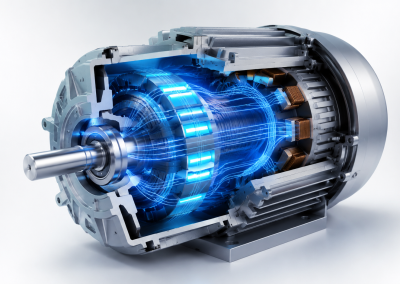
In our May and June newsletters, we used the STS theory to analyze the separation "technology" of rare earth minerals and the role of minerals as "raw materials". This month, through the analysis of motor "technology",we can gain a deeper understanding of the dynamic nature of permanent magnet "products". Electric motor technology essentially revolves around the conversion of electrical energy into mechanical energy. Motors transform electrical energy into magnetic energy, which is then converted into mechanical energy. Conversely, generators use mechanical energy to induce magnetic field changes, resulting in electrical output. This intermediary nature of magnetic energy directly affects the efficiency of energy conversion between electrical and mechanical forms.
Permanent magnets are not the only option for generating magnetic fields in electric motors; electromagnets are also widely used. Motors using electromagnets, such as ABB's new SynRM motor that achieves IE6 efficiency without permanent magnets, can alleviate reliance on rare earth materials. However, it's essential to recognize the differences between permanent and electromagnet-based motors. Permanent magnets provide consistent magnetic fields without additional energy input, storing and compressing magnetic energy within their molecular structure. These properties give permanent magnets a unique advantage in electric motor design, especially in vehicles. Permanent magnet motors generally offer higher energy conversion efficiency in the same volume and weight compared to other types of motors.
Electric motor "technology" not only transforms electrical and mechanical energy but also translates the physical properties of permanent magnets' molecular structure into practical dynamism within macroscopic systems. Ultimately, given the global focus on electric vehicles and green technology, the strategic importance of rare earth minerals, essential for powerful permanent magnets, becomes clear. This makes every segment of the permanent magnet supply chain a battleground for technological, economic, and political competition among nations.
Be the first to know the latest news in the magnetic materials industry.
Subscribe now!