NdFeB Magnet Applications in Automotive Electronics and Electric Motors: A Guide to Precision Magnetization, Cogging Torque, and Sensor Selection
This article is written by New Favor Industry Co., Ltd.
New Favor specializes in the manufacturing and application solutions of high-performance rare earth magnets such as Neodymium Iron Boron (NdFeB), dedicated to providing stable and reliable magnetic component support to clients worldwide.
What Is Precision Magnetization—and Why Does It Define Motor Performance?
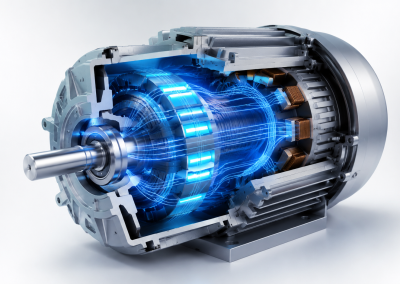
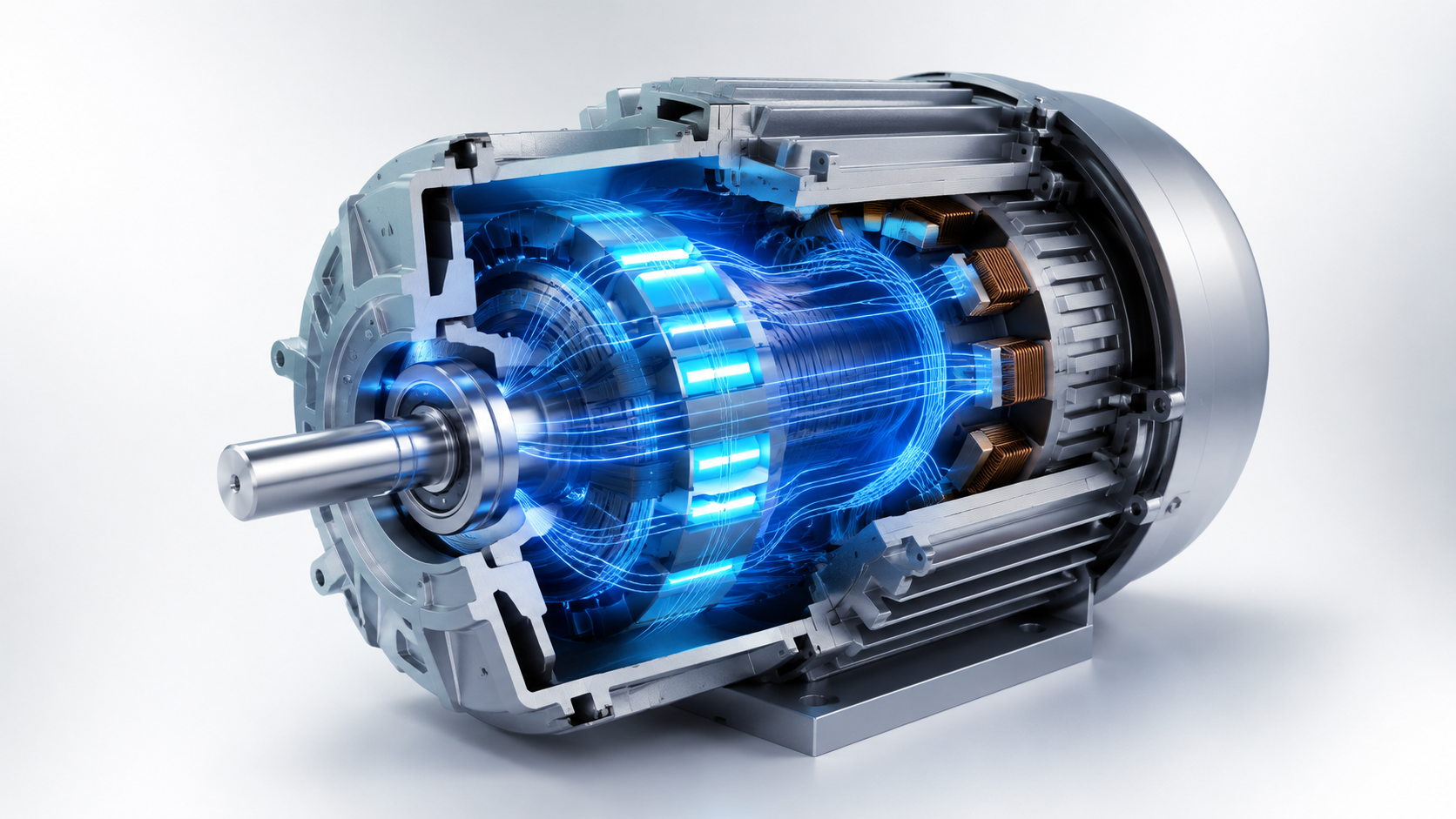
Precision Magnetization refers to a manufacturing process in which permanent magnetic materials are magnetized using specific waveforms and magnetic circuit designs. Unlike conventional symmetric north-south pole magnetization, precision magnetization allows the spatial distribution of magnetic flux density to be tuned to match a motor's stator structure and controller drive method — directly affecting cogging torque, noise and vibration levels (NVH), and overall energy efficiency.
As modern electric motor design continues to demand lower noise, higher power density, and greater miniaturization, magnetization waveform selection and magnetic circuit engineering have become the defining variables in motor performance.
Three Primary Magnetization Waveform Types and Their Applications
Through advanced tooling and fixture development, today's precision magnets can be produced with the following magnetization profiles:
Sinusoidal Magnetization
Most commonly applied in permanent magnet synchronous motors (PMSM). Sinusoidal magnetization effectively reduces cogging torque and minimizes torque ripple, enabling smoother motor operation. It is the preferred solution for noise-sensitive applications such as automotive HVAC systems and power seat actuators.
Square Wave Magnetization
Paired with square wave drive motors, this waveform delivers higher starting torque and is well-suited for applications where torque density takes priority over acoustic performance. Under equivalent control strategies, square wave magnetization typically produces greater torque ripple than sinusoidal magnetization.
Saddle Wave and Asymmetric Magnetization
Differential magnetization applied at specific angular segments or zones, meeting specialized starting torque requirements. This approach is also widely used in multi-pole, high-consistency magnetization for Hall effect sensor applications.
In addition, New Favor Industry possesses advanced multi-pole magnetic circuit development capabilities — including designs where the inner and outer rings of a single ring magnet carry a pole count differing by one — for ultra-high-precision sensing or specialized gear-reduction motor applications with tight space constraints.
Four Core Application Areas for Precision Magnets
New Favor Industry operates compression presses ranging from 6MT to 200MT and advanced injection molding lines, supporting customized production for the following end applications:
1. EV Thermal Management Systems (Heat Pumps, Electric Water Pumps, Electronic Expansion Valves)
EV thermal management systems place three primary demands on magnets: corrosion resistance, tight dimensional tolerances, and thermal stability. The brushless DC motors (BLDC) driving heat pump components operate continuously in high-temperature, high-humidity environments — any magnetic degradation directly reduces system efficiency.
How an automotive heat pump cycle works:
- Fan Motor + Evaporator: Low-temperature refrigerant absorbs heat from the ambient air; the fan motor expels dry, cool air
- Compressor Motor: The heat-laden refrigerant is compressed into high-temperature, high-pressure refrigerant
- Heat Exchanger: Coolant from the thermal system and high-temperature refrigerant enter the heat exchanger simultaneously; the coolant absorbs heat from the refrigerant and returns to the storage tank as heated fluid
- Electronic Expansion Valve Motor: The cooled refrigerant passes through the expansion valve, where it is precisely depressurized back to a low-temperature state, completing the cycle
Every stage of this system — from the continuous operation of the fan, to the high-load drive of the compressor, to the micron-level regulation of the electronic expansion valve — depends on stable output from precision permanent magnet motors. Custom sinusoidal magnetization is the critical process technology that ensures accurate actuation across all heat pump components under extreme operating conditions.
2. Automotive Smart Cabin and Comfort Systems
Power seat adjustment motors, automotive air conditioning compressors, and similar comfort systems demand near-silent operation and smooth, jerk-free motion. Optimizing cogging torque through saddle wave or custom magnetization waveforms produces a measurably quieter, more refined in-cabin experience.
3. Automotive Sensors (Hall Effect Sensors)
Wheel speed sensing, steering angle detection, and position sensing all operate on the Hall effect principle, requiring extremely high batch-to-batch consistency in magnetic field output. Multi-pole magnetization designs enable precise sensing within confined spaces and are the foundation of sensor reliability.
4. Consumer Electronics Magnetic Attachment Modules
Magnetic attachment modules in smartphones, tablets, and smart wearable mounts require strong, stable magnetic force through multi-pole arrays at minimal thickness. These applications place strict demands on thin-profile dimensional accuracy and surface finish consistency.
Bonded NdFeB and Injection Molded Magnets: Why Modern Automotive Design Is Moving Away from Sintered Magnets
Bonded NdFeB Magnets and Injection Molded Magnets are permanent magnets formed by combining NdFeB magnetic powder with a resin (polymer) binder through compression molding or injection molding. Compared to traditional sintered magnets, their core advantages include:
- High shape flexibility: Complex geometries can be formed in a single step, including direct overmolding onto rotor shafts
- High dimensional accuracy: Secondary machining is typically unnecessary; tolerance control surpasses sintered magnets
- Structural toughness: Resistant to chipping and cracking, well-suited for high-vibration automotive environments
- Complex magnetic circuit compatibility: Multi-pole magnetization can be realized within a single component, meeting the compound requirements of sensors and micro-motors
FAQ: Magnetization Waveform Selection and Material Specification
Q: How do I select the appropriate magnetization waveform for a specific motor?
Waveform selection depends on the motor's back-EMF waveform and the controller drive method. Square wave motors paired with square wave magnetization deliver higher torque output; PMSM motors paired with sinusoidal magnetization minimize torque ripple for optimal acoustic performance. New Favor Industry's engineering team provides magnetic circuit simulation and custom waveform development support.
Q: What thermal specifications should I consider when selecting magnets for EV heat pump motors?
Magnets driving heat pump motor components must maintain stable magnetic performance across a wide temperature range of -40°C to 150°C — this refers to the thermal specification of the magnet material itself, not the ambient operating temperature of the heat pump system. Standard bonded NdFeB and injection molded magnets reliably operate up to 150°C. For applications where localized temperature rise exceeds this limit (such as high-speed compressor motors), special high-temperature binder formulations — such as sodium silicate-based or high-temperature PPS resin systems — can extend the upper limit to 200°C. We recommend sharing your operating temperature, dimensional requirements, and production volume with New Favor Industry's engineering team for specific material guidance.
Q: What is the difference in thermal performance between bonded and injection molded magnets?
The maximum operating temperature of both magnet types is primarily determined by the binder formulation rather than the molding process itself. Standard epoxy resin binders are rated to approximately 110–120°C; Nylon (PA) or polyphenylene sulfide (PPS) binders reach 150°C. New Favor Industry can provide specific selection recommendations based on your operating temperature, space constraints, and production volume.
Q: How does pole count in multi-pole magnetization affect sensor accuracy?
Higher pole counts improve angular resolution in sensors, but place increasingly strict demands on magnetization uniformity. New Favor Industry is capable of producing ring magnets where the inner and outer rings carry pole counts differing by one — enabling high-precision absolute position sensing for ABS sensors or specialized gear-reduction motor applications.
Further reading:Laminated Magnets — Innovative Technology for Improving Motor and Energy Efficiency
For technical inquiries or custom requirements related to automotive electronics, micro-motors, custom magnetization, or consumer electronics magnetic modules, please contact New Favor Industry Co., Ltd.
Submit your inquiry or reach us via LINE for professional technical support:
Inquiry form:https://forms.gle/zQqPLDrzs6auQLce7