NdFeB Magnets and the Role of Heavy Rare Earth Elements in Enhancing Thermal Stability

This article is written by New Favor Industry Co., Ltd.
New Favor specializes in the manufacturing and application solutions of high-performance rare earth magnets such as Neodymium Iron Boron (NdFeB), dedicated to providing stable and reliable magnetic component support to clients worldwide.
Whether you are in the electronics, energy, or automation industries, our expertise ensures efficient and precise magnetic solutions tailored to your needs.
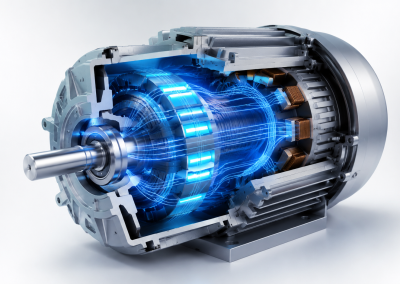
Neodymium-Iron-Boron (NdFeB) magnets are widely used in electric motors, wind turbines, and high-precision sensing devices due to their outstanding magnetic properties. However, to improve thermal resistance and demagnetization stability, the incorporation of heavy rare earth (HREE) elements such as Dysprosium (Dy) and Terbium (Tb) during the production process has become a critical technology.
The primary purpose of adding HREEs is to increase the intrinsic coercivity (iHc) of the magnets, which effectively prevents demagnetization in high-temperature environments. At New Favor Industry Co., Ltd., we specialize in customized magnetic materials and application solutions. Our expertise in HREE alloy formulations and grain boundary diffusion (GBD) technologies allows us to help clients select the optimal magnet composition tailored to their specific application scenarios.
To ensure stable magnetic performance, the base alloy is primarily composed of Neodymium (Nd) and Iron (Fe), and may include a portion of Praseodymium (Pr) to fine-tune magnetic properties. For further enhancement of magnetic strength and material stability, the ratio of heavy rare earth elements such as Dy and Tb can be adjusted according to application requirements. Additionally, minor alloying elements such as Cobalt (Co), Aluminum (Al), Copper (Cu), Gallium (Ga), Vanadium (V), and Titanium (Ti) may be added individually or in combination to improve specific material characteristics.
The proportion of these metallic elements can be tailored based on the specific requirements of the end application. For customized magnet alloy solutions, please feel free to contact the New Favor team for expert consultation.
Three Core Production Technologies
Different production approaches significantly influence both magnetic performance and cost structure. Currently, the following three methods are considered mainstream:
- Single Alloy (Direct Alloying) Technology:Dy or Tb is directly melted into the base material. This process is simple but requires a higher amount of rare earth elements.
- Dual Alloy (Blended Alloy) Technology:Two different alloy compositions are blended to strike a balance between performance and cost.
- Grain Boundary Diffusion (GBD) Technology: Also known as Dy/Tb diffusion technology, this method involves a low-temperature diffusion process that concentrates HREEs at grain boundaries. It significantly reduces overall rare earth usage while enhancing the magnet's performance-to-cost ratio.
GBD technology is the most favored solution for high-end applications and is particularly suitable for high-efficiency motors, aerospace components, and green energy systems.
Advantages of Stable Supply Chain and Custom Alloy Formulations
New Favor Industry Co., Ltd., we maintain diverse sourcing channels and a flexible inventory management system. Even amidst fluctuations in rare earth prices or geopolitical factors such as U.S.-China trade policy shifts, we continue to deliver stable lead times and consistent product quality. From raw material selection and magnet design to final product testing, we provide a full-service, vertically integrated workflow to support various industries with the most competitive magnetic solutions.
FAQ
Q:What is Intrinsic Coercivity (iHc)?
Intrinsic coercivity represents a magnet's ability to resist demagnetization from external forces. Higher iHc values indicate better heat resistance and stability, making it ideal for high-temperature or high-frequency environments.
Q:Why does Grain Boundary Diffusion reduce rare earth usage?
GBD strengthens only the grain boundary regions rather than requiring a large amount of Dy or Tb throughout the entire magnet. This approach enhances demagnetization resistance while effectively lowering material costs.
Q: What types of products most commonly use HREE-enhanced magnets?
Electric vehicle motors, wind turbine generators, servo motors, medical imaging equipment (such as MRI systems), as well as aerospace and defense components frequently utilize high-performance NdFeB magnets with heavy rare earth elements.
Related Articles ➤〈Grain Boundary Diffusion Technology〉
If you have inquiries regarding magnet applications, rare earth alloy formulation, or procurement planning, feel free to contact New Favor team. We are ready to provide tailored solutions and expert advice.
Submit your inquiry or reach us via LINE for professional technical support:
Inquiry form:https://forms.gle/zQqPLDrzs6auQLce7