Grain Boundary Diffusion Technology:The Key to Upgrading NdFeB Magnet Performance

This article is written by New Favor Industry Co., Ltd.
New Favor specializes in the manufacturing and application solutions of high-performance rare earth magnets such as Neodymium Iron Boron (NdFeB), dedicated to providing stable and reliable magnetic component support to clients worldwide.
Whether you are in the electronics, energy, or automation industries, our expertise ensures efficient and precise magnetic solutions tailored to your needs.
What is Grain Boundary Diffusion (GBD)?
Grain Boundary Diffusion (GBD) technology, also known as grain boundary diffusion, is an advanced magnet manufacturing technique widely used in the production of high-performance Neodymium Iron Boron (NdFeB) magnets. By diffusing heavy rare earth elements (such as Dysprosium [Dy] or Terbium [Tb]) into the grain boundaries of the magnet, this technology effectively enhances the coercivity (Hcj) and high-temperature performance of the magnets while maintaining cost efficiency. For industries seeking high-performance magnets—such as electric vehicles, wind power generation, and industrial automation—GBD has become a key solution.
How Grain Boundary Diffusion Works
The core of GBD technology lies in using heat treatment and low-temperature tempering processes to diffuse heavy rare earth elements (such as Dy or Tb) from the surface of the NdFeB magnet into its interior. The specific process includes:
• Surface coating:Applying heavy rare earth elements onto the surface of the formed NdFeB magnet by coating, sputtering, or chemical deposition.
• High-temperature diffusion:Through high-temperature treatment (usually between 800–1000°C), heavy rare earth elements diffuse along the grain boundaries into the magnet's interior.
• Low-temperature tempering:Conducting low-temperature tempering to stabilize the magnet's structure and further optimize performance.
This process ensures heavy rare earth elements are concentrated in the grain boundary region, enhancing the intrinsic coercivity (Hcj) of the magnet while minimizing the impact on remanence (Br), achieving a balance between performance and cost.
Key Advantages of GBD Technology
Compared to traditional single/double alloy techniques, GBD technology offers the following significant advantages:
• Efficient use of heavy rare earths:Only a small amount of Dy or Tb is needed to greatly enhance coercivity, reducing material costs.
• Improved high-temperature performance: Magnets can maintain stable performance even in high-temperature environments (such as EV motors or wind turbines).
• Flexible application: Suitable for magnets of various shapes and sizes, meeting diverse industry needs.
• Effective resource utilization:Reduces heavy rare earth consumption and reliance on scarce resources, aligning with sustainability trends.
These advantages make GBD technology the preferred method for manufacturing high-performance NdFeB magnets, especially in cost-sensitive applications.
Applications of GBD Magnets
Magnets produced using GBD technology are widely used in the following fields:
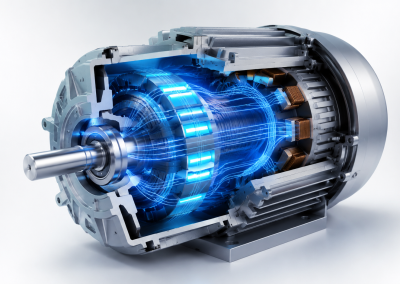
• Electric vehicles (EVs) and hybrid vehicles: Used in drive motors, offering higher efficiency and high-temperature resistance.
• Wind power generation: Enhances generator stability and durability, adapting to harsh environments.
• Industrial automation:Used in servo motors and robots, ensuring high precision and reliability.
• Consumer electronics:Applied in hard disk drives, speakers, etc., meeting miniaturization and high-performance requirements.
These application scenarios demonstrate the importance of GBD technology in modern technology.
Why Choose GBD Magnets?
For companies requiring high-performance magnets, GBD technology not only delivers superior performance but also effectively controls costs. Compared to traditional techniques, its lower rare earth consumption and higher performance make it a popular market choice. Furthermore, as global attention to sustainable materials increases, magnets produced with GBD technology align better with eco-friendly trends, helping companies stand out in the competition.
GBD technology is redefining the manufacturing standards of NdFeB magnets, providing more efficient and economical solutions for various industries. As a leading magnet supplier in Taiwan, New Favor Industry Co., Ltd. is committed to meeting your customized needs.
FAQ
Q:What is the difference between GBD technology and traditional alloy techniques?
GBD technology enhances coercivity by diffusing heavy rare earth elements into the grain boundaries, requiring less rare earth and lowering costs. In contrast, traditional alloy techniques require uniform mixing of rare earths before sintering, resulting in higher material usage and cost.
Q:Are magnets produced with GBD technology more resistant to high temperatures?
By enhancing coercivity, magnets made with GBD technology can maintain stable performance at higher temperatures, making them especially suitable for applications such as electric vehicles and wind power generation.
If you have any needs for customized magnets or technical questions, please contact the New Favor team. We will provide you with the most suitable professional support.
Submit your inquiry or reach us via LINE for professional technical support:
Inquiry form:https://forms.gle/zQqPLDrzs6auQLce7